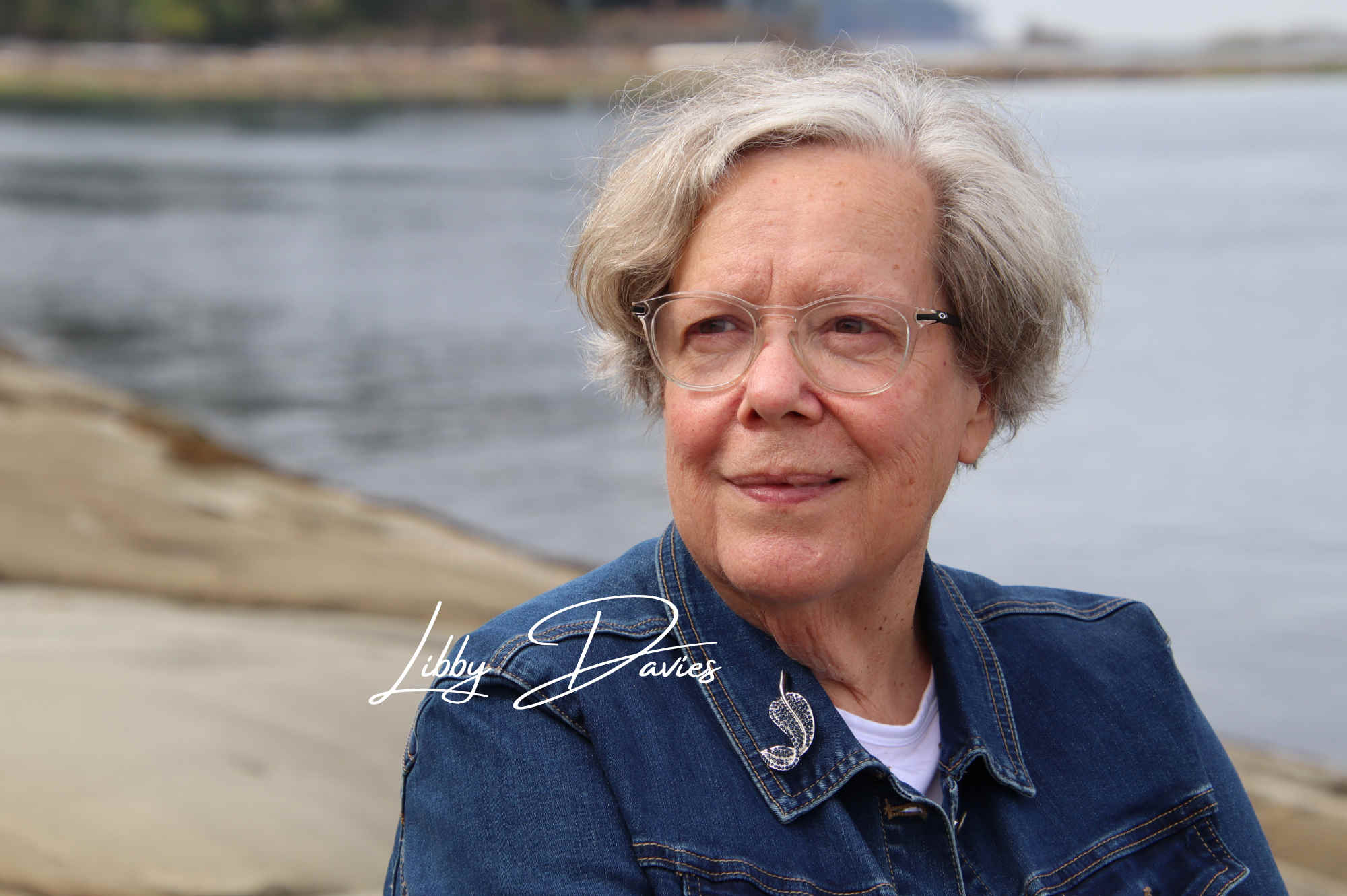
Ms. Libby Davies (Vancouver East, NDP): Mr. Speaker, It’s a great pleasure to speak in strong support of the Kyoto Protocol. First I want to say that it is about time. This has taken so long.
I have to question why it has taken the government so many years of foot dragging under the guise of consultation that now after 12 years we’re still waiting for the accord to be approved. Finally, this very important debate is happening, to meet our targets of a 6% reduction in greenhouse gas emissions from the 1990 levels.
Millions of Canadians suffer daily from the effects of smog. The estimated cost to our health care system is in the billions. Add to that the cost to farmers who are suffering from the effects of unpredictable and often catastrophic weather conditions. Global warming is clearly the cause.
We must recognize that as Canadians, we consume more energy per capita than any other country in the world. We use more total energy than the 700 million people on the African continent. We in the NDP understand that this is not just a Canadian issue; this is an issue about global justice.
After 12 years of waffling and inaction by the Liberal government, Canadians have every reason to be very sceptical about what the Liberals are really up to here and whether or not they will deliver on their promises on the environment. Since coming to office in 1993, they have failed to deliver on their environmental commitments. In the Liberal Red Book, for example, in 1993 there was a promise to reduce carbon dioxide emissions by 20% from 1988 levels by 2005. Well, the Prime Minister abandoned that one long ago.
One thing that has been really disturbing about the whole debate around Kyoto is the campaign of fear that has been undertaken by corporations and provinces like Alberta and even my own province of British Columbia. I have seen the full-page ads in the Globe and Mail and other publications. I have seen the letters, the advertising campaigns and the TV ads.
I received something in the mail from the Canadian Coalition for Responsible Environmental Solutions. I was very interested to know who was in the coalition because it said, “We are concerned about a rush towards a decision to ratify the Kyoto protocol without due consideration”. I thought that was really strange because we had already had 12 years of debate. When I read further, I saw that the letter was signed by none other than the President of the Canadian Association of Petroleum Producers, the president and CEO of Canadian Manufacturers and Exporters, the President and Chief Executive of the Canadian Council of Chief Executives, and the President of the Canadian Chamber of Commerce.
This was nothing more than propaganda put out by corporations which have tried to create fear among Canadians and among workers that they have something to lose by ratifying Kyoto rather than that we have a tremendous amount to gain. I was also very disappointed that in my own province of British Columbia the premier, Gordon Campbell, sent all MPs a letter in which he said:
The federal Kyoto implementation plan is not the right plan by any stretch. As a result, being opposed to Kyoto is not the same as opposing efforts to prevent climate change. We must have the courage to realize that Kyoto is not the only way to go. He never spelled out what is the other way to go. What he further did in his letter was to instil fear in people that jobs would be lost, between 11,000 and 37,000 jobs in British Columbia. This obviously would create a lot of fear.
By contrast to these kinds of fear campaigns and the foot-dragging by the Liberal government, we have seen real leadership on this issue come from peoples’ organizations and the environmental community. I have had hundreds of e-mails and letters and phone calls from my constituents who believe very strongly that the future of their children and of our communities depends upon adopting Kyoto and being very clear that we are prepared to makes changes. We should be prepared to make drastic changes to improve the health of our children and the health of our environment.
I am very proud of the fact that the Canadian Labour Congress and the Communications, Energy and Paperworkers Union of Canada, as a couple of examples, have been very strong on this issue and have made it very clear that they wholeheartedly support the ratification of Kyoto.
In fact in terms of CEP, a major union that represents many workers in the energy field, I was very proud when I read that members of the local in Calgary who work in the oil industry passed a resolution in September calling on the government to ratify Kyoto. They understood that the propaganda from the corporations in Alberta, the oil and gas interests that were trying to pose that they were interested in the security of jobs for workers, had nothing more to do than their fear about losing profits. That was the bottom line for them.
I want to congratulate the CLC and CEP for having the courage to speak the truth and to stand up and defend our environment. The same can be said for the Western Canada Wilderness Committee, that just a couple of months ago spoke out and made it very clear that oil and gas drilling near the Queen Charlotte Islands had to be stopped. We’ve had a moratorium on oil and gas drilling. They pointed out very clearly that if that moratorium is lifted, as the B.C. government would like to do, it will have a tremendous impact on defeating the whole principle and integrity of Kyoto. I’d like to congratulate groups like the Western Canada Wilderness Committee and the Living Oceans Society for speaking out.
We’ve also seen groups like the David Suzuki Foundation and the Climate Action Network Canada. I have attended forums on Parliament Hill which they have organized to point out again and again that the shift to a low carbon energy efficient economy offers significant opportunities to every region of Canada in terms of industrial innovation, greater energy self reliance, public health benefits, rural economic development and urban renewal.
The Federation of Canadian Municipalities has also pointed out that well-funded public infrastructure in Canadian cities, for example public transit, would go a long way to meeting our commitments under Kyoto. These cities are desperately hurting from pollution and smog. Kids end up in emergency rooms because of asthma.
We in the NDP have consistently stood up for our environment and for the adoption of the accord. We’ve called on the government to adopt a plan, including a requirement of a 20% green energy in all federal departments in five years, requiring government vehicles to use alternative fuels, creating a dedicated transit infrastructure fund, redirecting tax incentives to sustain and encourage renewable energy and legislating a mandatory blend of ethanol in gasoline.
We’ve also been very clear that we need a green jobs fund to ensure there is a just transition, as called for by the CLC, so that attention is paid to the security of workers. Kyoto offers significant opportunities and benefits. It’s something that we should be embracing.
We should be willing to make change for the future of our planet and for the future of our children. For Members who have the gall to stand up and say that they want to deal with climate change but they won’t support the accord, I say shame on them. They’re playing a very dirty game. Canadians have made it very clear that they support the Accord.