NDP leader Jagmeet Singh calls opioid epidemic national crisis on campaign-style Vancouver visit
NDP leader Jagmeet Singh calls opioid epidemic national crisis on campaign-style Vancouver visit
Singh embarked on the tour to help build a profile in suburban ridings around Toronto and Metro Vancouver in particular, but is holding his first event in one of the NDP’s urban strongholds in Vancouver, Kwan’s Vancouver East riding, which was held for 18 years by Libby Davies.
The original article, NDP leader Jagmeet Singh calls opioid epidemic national crisis on campaign-style Vancouver visit was published on October 20, 2017 in The Vancouver Sun. Author(s): Derrick Penner
Israel and Palestine stall on road to peace
Israel and Palestine stall on road to peace
A leading Palestinian activist has said that it may be time to dissolve the Palestinian Authority and “dump the occupation back at Israel’s doorstep”. Huwaida Arraf is a Palestinian-American Christian and founding member of the International Solidarity Movement. She told the Straight that the disintegration of the Palestinian territories’ governing party could be the best thing for its people. “Creating the Palestinian Authority, in a way, relieved Israel of a lot of the obligations of an occupying power,” she explained in a telephone interview from New York City. “They kind of relieved themselves of the minuscule administrative tasks and, at the same time, can [now] blame the Palestinian Authority for a lot of things that are not even in its control.”
The original article, Israel and Palestine stall on road to peace was published on November 25, 2009 in The Georgia Straight. Author(s): Travis Lupick
Libby calls on federal government to keep Vancouver shelters open
The Health Minister avoids answering Libby’s question on drug shortages
The Health Minister avoids answering Libby’s question on drug shortages
[[{“type”:”media”,”view_mode”:”media_large”,”fid”:”203″,”attributes”:{“alt”:””,”class”:”media-image”,”typeof”:”foaf:Image”}}]]
House of Commons
HANSARD
October 25, 2012
Ms. Libby Davies (Vancouver East, NDP):
Mr. Speaker, it is a problem the minister is not willing to tackle.
On March 14 of this year, the House voted unanimously in favour of an NDP motion to mitigate the drug shortage crisis.
The motion called for the government to “develop a nationwide strategy to anticipate, identify, and manage shortages of essential medications”.
It sure looks like the government failed when it came to Zarontin.
Now families are struggling to cope.
What is the government’s plan to get this crucial drug into the hands of Canadians who desperately need it?
Hon. Leona Aglukkaq (Minister of Health and Minister of the Canadian Northern Economic Development Agency, CPC):
Mr. Speaker, on another matter, this summer a study showed that higher costs of living have negative impacts on the health of Canadians and that is why our government has focused on jobs and prosperity. When our government went to Washington this summer to raise the issue of indigenous and aboriginal people fully participating in the international AIDS conference after some 30 years, that member joined a march on the White House demanding higher taxes. Higher taxes in the United States and higher taxes in Canada, we all know are not good for the health of Canadians.
Libby calls on Conservative government to better support housing and health care
‘It’s not a fight we’ve won’: Vancouver’s iconic nuclear war activists renew calls for peace
‘It’s not a fight we’ve won’: Vancouver’s iconic nuclear war activists renew calls for peace
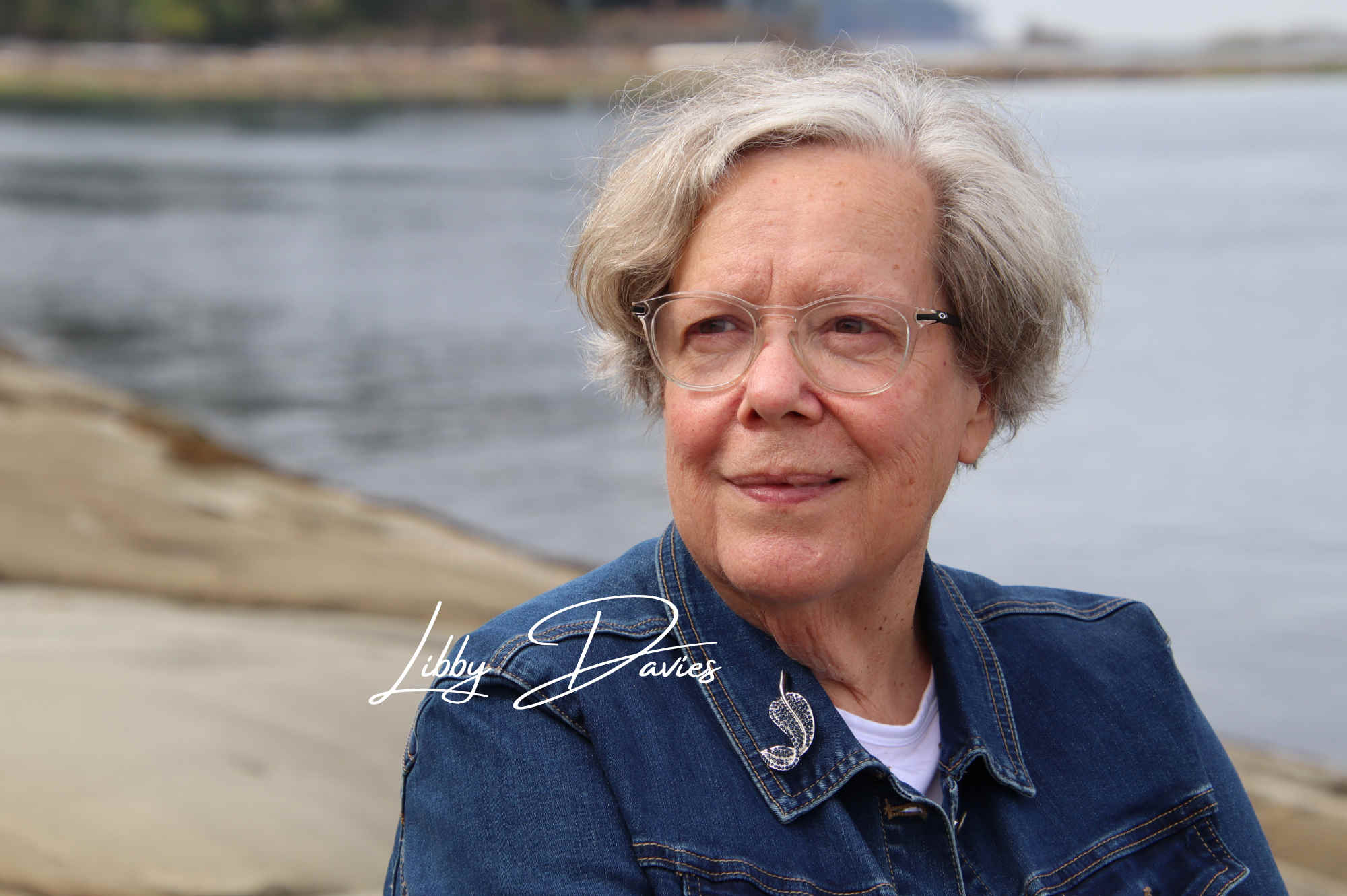
Libby Davies, a former NDP MP and Vancouver councillor, has been doing her best to keep the spirit alive. In 1983, Davies was one of several city councillors who voted to designate Vancouver a nuclear weapon-free zone. The designation was largely symbolic, but culminated in numerous anti-nuke signs posted throughout the city. "City councillors were meant to think about pot holes and zoning," Davies told CBC News. "The idea that we were involving ourselves in a global issue was very controversial."
The original article, 'It's not a fight we've won': Vancouver's iconic nuclear war activists renew calls for peace was published on October 7, 2017 in CBC. Author(s): Jon Hernandez
True Politics Special- Libby Davies
True Politics Special- Libby Davies
True Politics Host, Steven Soos sits down with former Deputy Leader of Canada’s NDP, Libby Davies!
The original article, True Politics Special- Libby Davies was published on July 7, 2020 in True Politics. Author(s): Steven Soos