Bill C-304 moves back to Parliament for final vote
NDP showcases female caucus on International Women’s Day
NDP showcases female caucus on International Women’s Day
OTTAWA – Which federal political party speaks up most for Canadian women? The NDP will make its case this afternoon, when women MPs will ask all the party's questions in the House of Commons. NDP Leader Jack Layton usually asks his party's first question of the government in Question Period. With Layton on the shelf after hip surgery, deputy leader Thomas Mulcair has been doing the honours. But on Tuesday, Libby Davies will lead off the party's questions, followed by Carol Hughes, Irene Mathyssen, Linda Duncan, Niki Ashton, Jean Crowder, Chris Charlton and Megan Leslie.
The original article, NDP showcases female caucus on International Women's Day was published on March 8, 2011 in Postmedia News. Author(s): Andrew Mayeda
Getting women into Canada’s Parliament
Getting women into Canada’s Parliament
Originally published in Policy Options, May 14, 2019
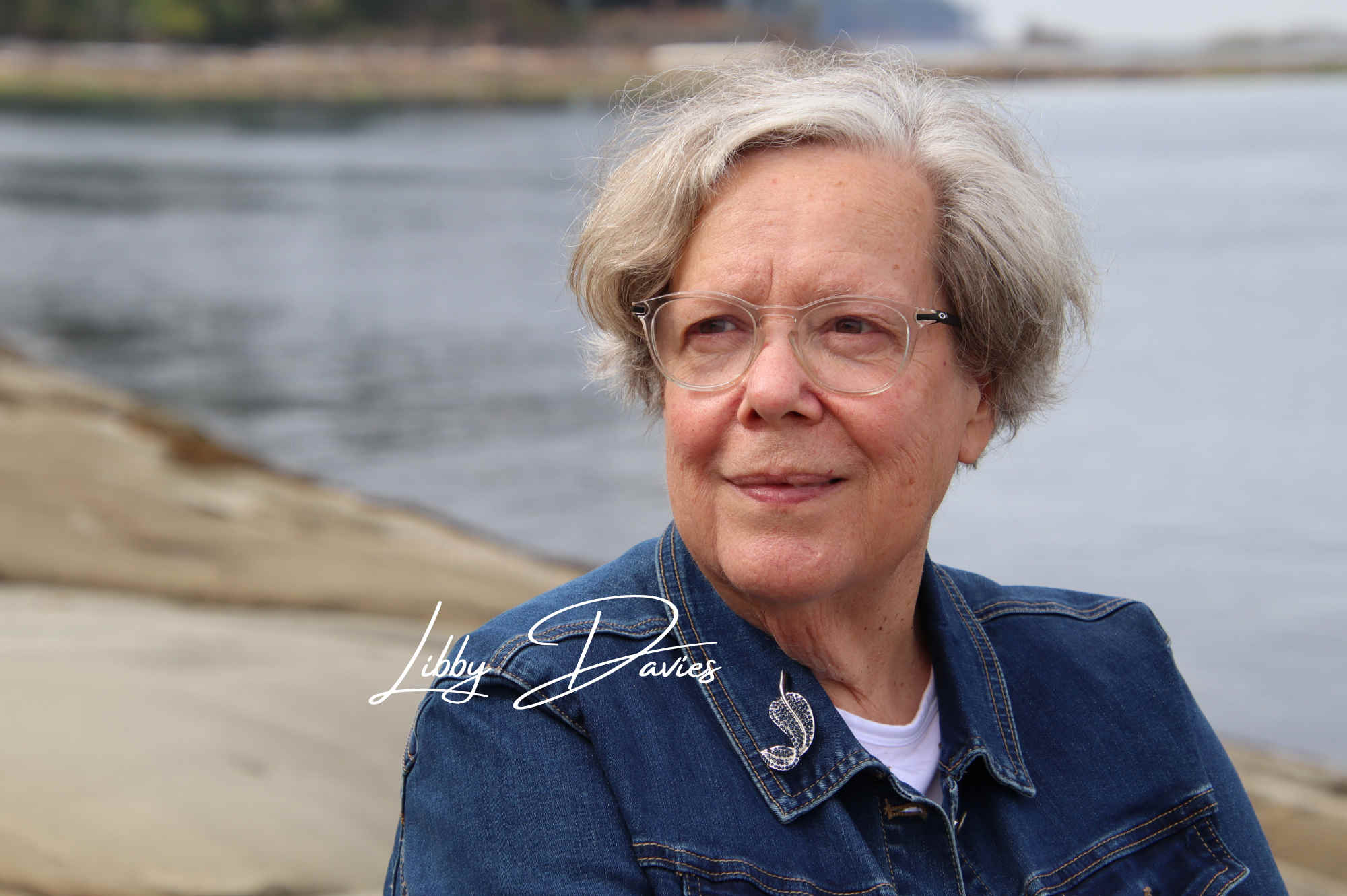
Former NDP MP and deputy leader Libby Davies, who recently published a memoir, and political scientist Jeanette Ashe discuss gender and elected office.
Jeanette Ashe: You’re one of few women ever elected to Canada’s House of Commons, and you were also the first openly lesbian MP — where today LGBTQ MPs make up approximately 2 percent of the House. When you were first elected in 1997, there were only 62 women MPs, and when you left in 2015, there were 77 women MPs. This isn’t a terrific increase. Today, even with a prime minister who calls himself feminist at the helm, women make up only 27 percent of all MPs. While this is a record high, in real numbers it is only 90 women — less than one third of all MPs. And compared with other similarly situated countries, Canada’s international ranking of 62nd out of 193 is embarrassingly low, with most established democracies and many nondemocracies ahead of us.
We know women’s experience during the “pathway to Parliament” is different than men’s: they’re less likely to get recruited, to put their names forward, to get supported, to win the nomination, to sit in the House, and once there, they’re less likely to stay and get promoted to the front benches. But you shattered these odds.

Libby Davies: It never entered my mind that I shouldn’t run because I was a woman, but along the way I’ve reflected on the barriers. I don’t recall the party encouraging me the time I first ran — if anything, it was “hands off.” I’d been a parks commissioner and city councillor prior to running — and I had also run for mayor — so I had the experience behind me. I was encouraged by people in the community to run, and I wanted to run because I was so frustrated that the government had cut social housing as part of its austerity program in 1995. Before I put my name forward, though, I thought about who else was running, in particular a well-known male activist in the community. I was concerned about having two well-known activists run against each other, and I tried to speak to him about it. He didn’t divulge what he was planning. I realize now that my approach to running was gendered. In the end, I went ahead and ran. I discuss this in more length in my book.
Winning the nomination
JA: Many frame the “why are so few women in politics” question as a party issue: to get elected, you first need to get selected as a party’s candidate in a coveted “safe seat.” Party members are often inclined to choose candidates who look like politicians who’ve come before. Among other things, “standard-model candidates” tend to be white straight men. Many believe voters prefer such candidates, although research fails to support this claim. Still, in some parties, members are much more likely — with my own work suggesting up to five times as likely — to choose men over women.
LD: In that first nomination I ran against four men and it was a tough race — I won by a handful of votes. Over the years I’ve talked to many women who’ve sought nominations, some successful, some not. They all said the same thing: it wasn’t what they expected. It was combative, stressful and hard to raise money, and they often felt like they were up against an invisible set of controls that didn’t include them. I made it through because I had people on my side who knew how it worked — inside the party, and that was critical. These were people who knew how to sign up members and work a campaign. The nomination speech was crucial, and I worked hard with my team to hit the key issues, and to practise, practise, practise. I had a base from my previous electoral and activist experience and a reputation as a progressive fighter, having been a city councillor for five terms. Without that experience and support I think I would have been lost and would have lost the nomination too!
Getting elected
JA: The masculine culture in society transfers to parties and legislatures. The historical exclusion of women from public life permits masculine practices and gendered outcomes: for example, once elected, women are less likely to be promoted at the same rates as men. It’s also well documented that there’s a problem with retention when it comes to women MPs — once elected, they don’t stick around for as long as men. Not only were you promoted to front bench positions, including House leader and deputy leader, but you were elected six times.
LD: It’s much harder for women to stick around, especially if they have a young family. I was lucky that my son was already a young adult, but I talked with many women MPs who struggled with the conflicting messages from their party: on the one hand being told they supported women in office, but then facing the challenging hours of work, and the expectation that the party’s needs were top of the list of demands on your life. It seems like a never-ending struggle. Over 18 years I had the opportunity to work with several leaders — Alexa McDonough, Jack Layton, Nycole Turmel and Thomas Mulcair — as well as several PMs, including Jean Chrétien, Paul Martin, Stephen Harper. Women — especially the female leaders — faced a tough time in these years. What finally started to make a difference was the number of women and young people elected in the Orange Wave of 2011 — this is when issues like harassment, sexual harassment and family accommodation began to be seriously discussed.
Parliament Hill is like a sports game — it has winners and losers, and as a player you’re expected to take one for the team no matter the cost to your integrity. There’s an expectation that MPs will always play the game even when the rules aren’t written down but are shared through an inherited culture of rewards and punishments, and are reinforced by the media who are quick to report on the play-by-play. These unwritten rules were applied differently to women, and the punishments were harsher for women. For example, I remember when Belinda Stronach crossed the floor from the Conservatives to the Liberals, giving them a critical budget-passing vote, in 2005. The gendered, derogatory language was unbelievable and appalling — both what was permitted in Parliament and especially how it appeared in the media. In contrast, when a male MP crossed the floor to another party, it was generally seen as a matter of principle!
I was astounded to learn there had only ever been one other woman House leader in the history of Parliament, and then only for a few weeks. I managed to last eight and a half years. It was here again that polite persistence and not playing games of one-upmanship helped me navigate the turmoil and unpredictability of minority Parliaments as NDP House leader.
Reflections
JA: Women are still underrepresented, not just in the House but as committee members, chairs and Speakers. The calendar, night sittings and inadequate child care make it difficult for many MPs to fully participate in the work of Parliament, especially those who are in the later stages of pregnancy, breastfeeding or caring for dependants. And #MeToo has arrived on the Hill. It’s no secret that women MPs and staff are subject to sexual harassment and are much more likely to experience gender-based heckling. Even beyond the Hill, women MPs are subject to much more sexual harassment on social media. But policies, where there are any, fail to address the deep masculinized power structures of Parliament. We’ve just seen two women senior cabinet ministers kicked out of the Liberal caucus — one of whom was the first Indigenous woman minister of justice and attorney general. The intersectional implications of this were not lost on the dozens of young diverse women participating in Daughters of the Vote, who turned their backs on the PM.
Your story as told in Outside In gets at the guts of Parliament’s masculine culture and offers insight into making it a more gender- and diversity-sensitive place, so that everyone working there — from MPs to staff — can fully participate.

LD: Changing the sexist and patriarchal history of a place like Canada’s Parliament is no easy task! The biggest challenge is getting more women and underrepresented groups elected. Talk isn’t good enough anymore — it’s the actions that count. This change is happening — the growing presence and power of younger voices, as in #MeToo or the Indigenous rights movement, is inspirational.
Parties must not only seek out candidates from underrepresented groups — they must demonstrate they’ll change the political culture so that when we’re elected, we can be successful and not made invisible. We must demonstrate that those powerful unwritten rules that are so crushing if you don’t play the game can be thrown out in favour of transparency and building good will, not hyperpartisanship.
The media can be sexist and homophobic in its reporting — from how we dress (when a man can just wear the same suit every day!) to how women are characterized as “aggressive” or demeaned as “hysterical” when they try to be heard. I’ve had my own experiences of homophobia in media and federal politics, which I describe in my book, from how the media relayed my experience of coming out, to how opponents from other parties have tried to use homophobia to their political advantage.
Progressive women leaders approach politics differently. Look at PM Jacinda Ardern in New Zealand and what a difference she has made. Look at younger women who are African American and Latina who are taking elected office in the toxic environment in US politics. We have a duty to speak out. Rights are never handed out. We fight for them and then must make sure they are not eroded and undermined.
It’s a lifetime of work.
Libby asks the Conservative government to aid housing affordability
Libby asks the Conservative government to aid housing affordability
Ms. Libby Davies (Vancouver East, NDP) :
Mr. Speaker, soon the dream of buying a house will be out of reach for middle-class Canadians.
In B.C., the median price of a home is over $400,000, while the average family income is only $68,000.
Yet the Conservatives’ only plan is to cut a billion dollars next year. These cuts also eliminate funds for social housing, aboriginal housing and seniors in need.
Why is this government cutting funds for housing when it is so desperately needed?
Mr. Ed Komarnicki (Parliamentary Secretary to the Minister of Human Resources and Skills Development and to the Minister of Labour, CPC) :
Mr. Speaker, we did not cut funding to housing. In fact, under the economic action plan we had $2 billion for housing to ensure that there are houses built both for seniors and for those who are disabled. The New Democratic Party did not support those initiatives. In fact, it should be supporting initiatives like that.
Ms. Libby Davies (Vancouver East, NDP) :
Mr. Speaker, maybe the parliamentary secretary should read his own government estimates because the bottom line is the Conservatives are not helping middle-class Canadians.
In Vancouver, the average price of a two-storey home is a million bucks. That is 10% higher than last year. Prices have also jumped close to 10% in Regina, Halifax and St. John’s.
The housing crisis is real and it is hitting more and more people.
When will this government stop dragging its feet and adopt the New Democrat’s plan for a national housing strategy?
Mr. Ed Komarnicki (Parliamentary Secretary to the Minister of Human Resources and Skills Development and to the Minister of Labour, CPC) :
Mr. Speaker, there are over 12,000 housing projects across the country that the NDP did not support this particular government in undertaking. Now it is talking about what we are doing for housing. In fact, we had a number of tax initiatives and tax reductions. We put over $3,000 in the pockets of every Canadian family of four that that particular party did not support and did not even care to read the budget to see what was in it.
Libby promotes proportional representation to increase women's presence in Parliament
Libby asks the Conservative government to aid housing affordability
Libby promotes proportional representation to increase women’s presence in Parliament – Libby Davies
Libby promotes proportional representation to increase women’s presence in Parliament
House of Commons
HANSARD
March 3, 2011
Ms. Libby Davies (Vancouver East, NDP) :
Mr. Speaker, I would like to thank the member for Hamilton Centre for such a great overview of this issue and a very passionate speech in the House today about why we need to engage in democratic improvement.
He did mention, under proportional representation, that it is a real benefit for elected women. I think he said that 74 countries already have proportional representation and in those elected assemblies, we have seen an increase in representation from women.
In this House of Commons, it has been an ongoing struggle. We are still at about only 20% representation in this House.
I wonder if the member could explain why a system of proportional representation actually increases the diversity of elected bodies, such as the House of Commons, and ensures that women are getting elected, as well as other members of Canadian society who right now are completely underrepresented in this place.
Mr. David Christopherson (Hamilton Centre, NDP) :
Mr. Speaker, I thank my colleague for such an important question.
It has been shown, in a number of examples, that the first thing that happens is that there are more women, more Aboriginals, and more minorities in Parliament to reflect the population of our country.
The reason that happens is that when the lists are developed– and I ran out of time as it is a very short period of time to talk about something so complex–but when Canadians have that second vote for the party, the names of the candidates on the lists of each of the parties are there for them to see. We would hope that we would build in federal laws that would dictate the governance of electing people to those lists so that we would all have the basic fundamental tenet of democracy and that it I would not just be the whim of party leader to put their buddies on the lists. All that would do is replicate what we are doing in the Senate.
So, we want to ensure there is a level playing field, in the hope that, and this is what actually happens and we hope it would happen here, parties wanting to appeal. To the electorate, of course, are putting on the names of women, minorities and Aboriginals and electing them to their slate, to their list, and then from there, they would find their way here. The reason for that is the current system we know, as is shown in study after study and then because of plain common sense, is stacked against women. There are so many challenges, and I know there are some who will argue that. Nonetheless, the responsibilities for families still fall mostly on women. Women still make less money, so there is less disposable income to invest in a political career. There is a whole host of real challenges and blockages that have prevented women from getting here. What gives? They are over 50% of the population and they are less than 20% of the House. That is a major deficiency.
One of the benefits of proportional representation is that it would, if we take the example in other countries, increase the number of women, Aboriginals and minorities in this House, and that can only make it stronger.
Legislature Notebook: Wall downplays potential tax changes
Legislature Notebook: Wall downplays potential tax changes
The saga of Bev Oda and the wayward "not" has gripped the House of Commons. But it turns out a recent situation from Saskatchewan provincial politics has worked its way into the debate over whether the Conservative international co-operation minister breached the parliamentary privileges of MPs. Just before the House of Commons broke for a week, NDP MP Libby Davies raised in debate a ruling by Speaker Don Toth. In the spring 2010 sitting of the legislature, Toth found there was enough evidence to suggest Health Minister Don McMorris had misled the assembly to warrant a debate over whether he was in contempt of the legislature…"I believe that in this ruling, the Speaker in Saskatchewan clearly established that the test is not the member's statement in reply to an allegation, but it is actually the evidence before the Speaker that establishes the prima facie case," she said.
The original article, Legislature Notebook: Wall downplays potential tax changes was published on February 27, 2011 in The Star Phoenix. Author(s): James Wood
Kairos process not perfect: Tories
Kairos process not perfect: Tories
The Harper government issued its first, grudging acknowledgment Friday that a controversial funding decision and subsequent cover-up by International Co-operation Minister Bev Oda may have been less than pristine…Lukiwski also made the case that just because Oda testified in December that she didn't know who added the hand-written word "NOT" to the Kairos funding approval, that didn't contradict her later assertion that she ordered the revision. "Precise answers to questions do not constitute contempt," said Lukiwski. He blamed Liberal MP John McKay, who "should have asked different, or more, questions, or been more diligent in his inquiry." Transcripts of Oda's Dec. 9 testimony at the foreign affairs committee show McKay being cut off by Conservative chairman Dean Allison as he pressed the minister on the specifics of her knowledge about the doctored document. NDP MP Libby Davies called the government response "very tawdry." "They're hiding behind ludicrous technicalities," she said in an interview.
The original article, Kairos process not perfect: Tories was published on February 21, 2011 in CBC News. Author(s):