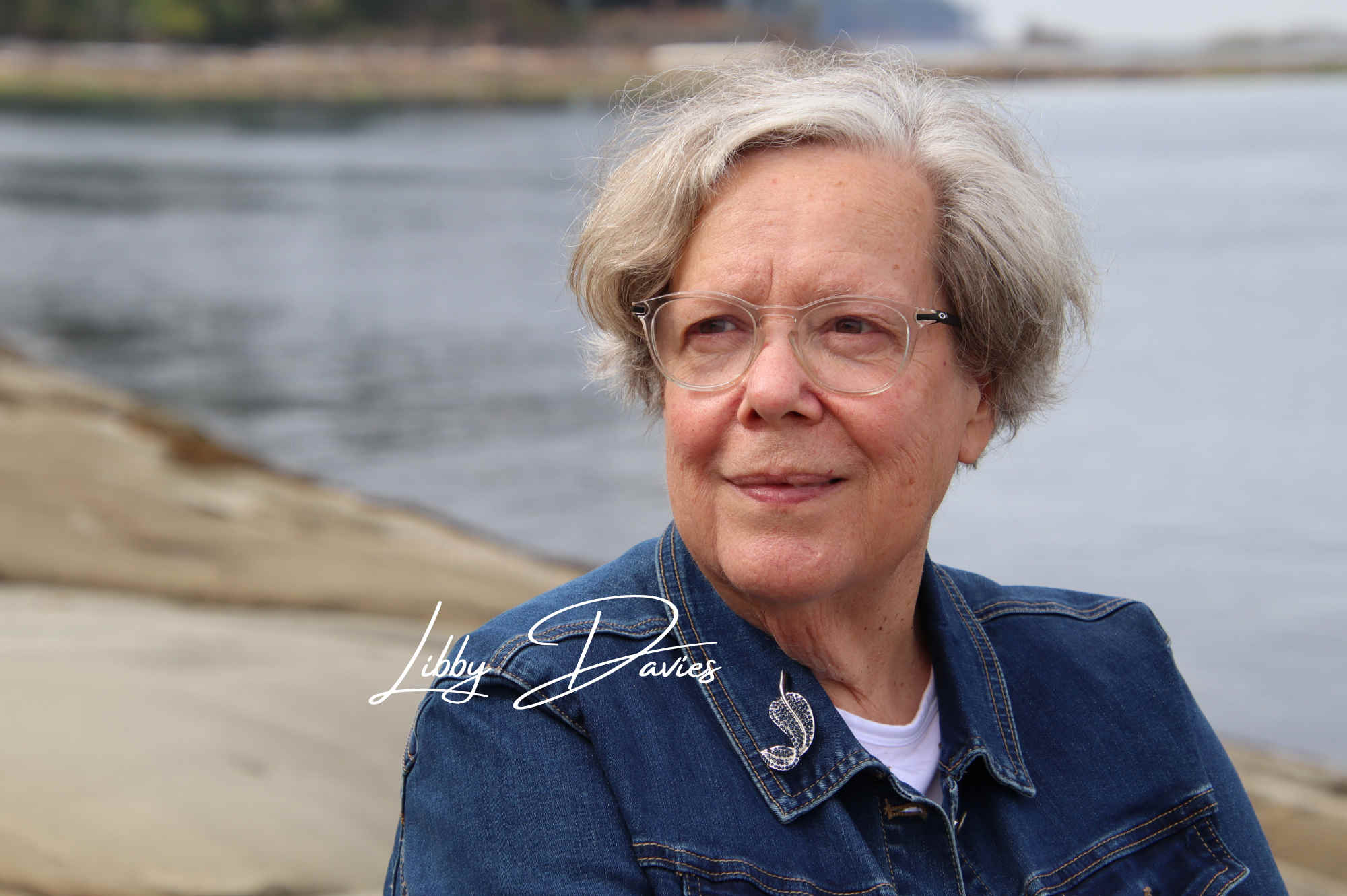
Libby speaks out for the rights of transgendered Canadians

Libby speaks out for the rights of transgendered Canadians

[[{“type”:”media”,”view_mode”:”media_large”,”fid”:”169″,”attributes”:{“alt”:””,”class”:”media-image”,”typeof”:”foaf:Image”}}]]

House of Commons

HANSARD

June 1, 2012

Ms. Libby Davies (Vancouver East, NDP):

Mr. Speaker, I am very proud to rise in the House today to support Bill C-279, which is An Act to amend the Canadian Human Rights Act and the Criminal Code in regard to gender identity and gender expression.

This bill has had a long history, and I want to first of all thank the NDP member from Esquimalt—Juan de Fuca for the tremendous work that he has done on this new version of the bill, as it has been in previous Parliaments. He has done an incredible amount of work within Parliament and by talking to individual members of Parliament and helping people understand the importance of this bill and what it means. He has also done significant work in the community, not just in the trans community but in the broader community, to bring about a better understanding of this bill. I certainly want to pay tribute and give respect to the work that my colleague has done.

This bill has actually had a long history. It was first introduced in the House in, I believe, 2005, and again in 2006 and then again in 2008 by Bill Siksay, who was the former member of Parliament for Burnaby—Douglas. He too did an incredible amount of work. It was a great day when the bill actually did pass in the House of Commons, as the member for Vancouver Quadra just noted a few minutes ago.

In February 2011, it did actually go into the Senate. Had it not been for the election, it is very possible that the bill would have gone through the Senate and would now be law. That history is interesting because it gives a sense of the importance of private members’ business, bills and motions and of how we have to keep plugging away and working at an issue. Sometimes it can be a very long and difficult road, with barriers and frustrations and sometimes elections arising before the goal of having a bill finally approved is reached.

This bill and its history have been quite remarkable. I want us to reflect on that today, because this is the fourth time around with this bill. It has already passed in a Parliament. We have an opportunity here today to do something historic, which is to affirm the rights of transgendered, transsexual and gender-variant Canadians who do not have the same degree of protection for their rights and freedoms as all other Canadians. That is why this bill is seeking to remedy that gap in the Canadian Human Rights Act and the Criminal Code.

I know some Conservative members may just oppose the bill outright. I would have serious questions about that, because it is a bill based on establishing our understanding about human rights and protection under the law. Other members may support the issue in principle but may believe that the bill is possibly not necessary and that somehow that protection already exists.

However, I think we need to be very clear that although other minority groups do have protection under human rights and the Charter of Rights and Freedoms, those rights are not guaranteed specifically to transgendered, transsexual and gender-variant Canadians because they are not identified as an identifiable group. While the charter now spells out race, nationality, ethnic origin, colour, religion, age, sex, sexual orientation, marital status, family status, disability and conviction for an offence for which a pardon has been granted, it does not include transgendered persons. Therefore, it is really important that we actually make this move.

I would point out that the Canadian Human Rights Act review panel in 2000 recommended that these changes take place. In other words, an independent evaluation beyond this bill in Parliament came to the same conclusion, the conclusion that these changes are needed.

I would also point out that gender identity and gender expression are grounds for protection under the UN Declaration on Sexual Orientation and Gender Identity, to which Canada was a signatory back in 2008, so we can see the international frame for this as well as see that our own experts in Canada are saying that this change needs to take place.

The bill is very timely. It is warranted. It has already been approved by a previous Parliament, so I am very hopeful that we will see our way here, on all sides of the House, to have the bill go through at second reading and pass on to committee.

The support in the community has been quite magnificent. A lot of people have worked very hard on this bill. They include the member for Esquimalt—Juan de Fuca, as I pointed out earlier, and also groups like Egale Canada, Jer’s Vision, Gender Mosaic, Ottawa Trans PULSE Project and Trans Pride Canada.

These groups, and many individuals as well, have worked very hard to bring about greater awareness of issues facing transgendered people and greater awareness that discrimination still exists in daily life. Whether we consider health care or employment, housing or social interactions and social acceptance, there is still discrimination, there is still persecution and there is still violence.

It is very interesting. When the member for Esquimalt—Juan de Fuca spoke in the first hour of debate, he laid out very well some of the reports that have been done. One done by Trans PULSE Project Canada, for example, shows that the level of depression among transgendered Canadians is as high as 61% to 66%, and there are issues around mental health. This all has to do with people feeling they are excluded, that they are facing discrimination and harassment, so it is very important that we address this inequality.

A bill like this is really just the first step. Putting something into law, enshrining a right and improving and strengthening the rights that we have, is surely the most important and significant first step that needs to be done, but it is only the beginning. From there, we have to ensure continual vigilance to make sure those rights and protections are upheld because, unfortunately, much discrimination still takes place, so the application of the law and an understanding about the law are really important.

We as legislators, as parliamentarians, have a really important leadership role to play in making it clear that we live in a society where, in our own communities and our own constituencies, we have transgendered constituents and that all people have the right to protection and dignity and respect under the law.

We can begin at that place, but we have to go further. We have to make sure, for example, that there is equal access to health care. Transgendered Canadians often find it very difficult to access health care services and are often denied medically necessary care. They are forced to deal with the issue of their gender before they can access the service. There are many examples, including not having equal access to surgery, an inequality that certainly exists in the provinces where there are different variations and standards. Some very important issues need to be dealt with, but first and foremost we need to get the bill through.

I want to appeal to all members of the House. This is a vote on principle in this bill, and if we accept the principle of what the bill is laying out, then let us get it to committee. At committee we can have a very constructive discussion about the bill, and there may possibly be amendments. The member for Esquimalt—Juan de Fuca, who brought the bill forward, has made it very clear and has shown in all of his work that he wants to engage, hear different points of view and find a way that the bill can be supported by all sides.

We have something very strong and healthy here. We are very close to getting this bill through, so again I want to appeal to all members of the House to consider the principles of the bill, which are about the protection of all Canadians in human rights and dignity and respect, and to allow the bill to go to committee so that there can be a further discussion in much more detail.

I am proud to be here today. Our NDP caucus, the official opposition, is 100% behind the bill, and we really hope other members of the House will find their way to support this bill as well and let it go to Committee.


Libby Speaks out on the Economic Crisis

Libby Speaks out on the Economic Crisis

Ms. Libby Davies (Vancouver East, NDP):

Mr. Speaker, GM has just announced hundreds more layoffs, adding to the already volatile situation facing Canadians. Seniors are seeing their hard-earned pensions evaporate as the TSX falls day after day. Mutual funds take a hit with every point lost on the markets, yet the government has done nothing to protect the savings of Canadians.

Will the government protect pensions before there is nothing left to protect?

Mr. Mike Lake (Parliamentary Secretary to the Minister of Industry, CPC):

Mr. Speaker, regarding the auto industry, the minister has said that we need to see a plan from automakers and unions for the industry’s long-term success. No one wants to be back where we are at a year from now.

Legislators in the U.S. said the same thing yesterday. They sent automakers back and told them to come back on December 2.

We need to see a solid, accountable business plan from automakers and their stakeholders.

Ms. Libby Davies (Vancouver East, NDP):

Mr. Speaker, to add insult to injury, soon if people fall behind in a couple of payments, they will face a punishing 5% increase in credit card rates. The finance minister’s response was another ineffective letter. The minister has failed to protect consumers on ATM fees, on outrageous text messaging fees and now on credit card interest rates.

Why is the government not standing up for Canadians? Why is it letting profitable banks exploit the pain of average people?

Mr. Ted Menzies (Parliamentary Secretary to the Minister of Finance, CPC):

In fact, Mr. Speaker, we are very proactive on this file. We have raised the issue with the banks, although the banks are their own governors. They decide how credit card fees are set.

We can encourage that. The finance minister was very successful in his interventions with the banking sector, but we do not regulate fees charged by financial sectors, nor should we.

Ms. Libby Davies (Vancouver East, NDP):

Mr. Speaker, it is not being proactive if the government is leaving generations of Canadians behind, with no action on protecting seniors’ pensions and no action on credit card hikes. Today Campaign 2000 is again forced to demand urgent action to combat poverty. Over 760,000 children, nearly 12% of all Canadian kids, live in poverty.

Where is the government’s national poverty reduction strategy? Why is there no action for the poorest of Canadians, yet there are huge tax cuts for the richest of Canada’s CEOs?

Hon. Diane Finley (Minister of Human Resources and Skills Development, CPC):

Mr. Speaker, our government has been very clear that we want to work with our colleagues in the House to eliminate poverty.

That is why we have taken the many steps we have to ensure families, and especially children and seniors, are in a much better financial position. That is why we introduced the universal child care benefit. That is why we have lowered the GST, which, by the way, helps the lower income people the most. Certainly people who are not paying taxes would not benefit from tax cuts in the way the GST cuts help them.

We are doing this because we want to eliminate poverty.


First week back in the House

First week back in the House

What a week! It flew by and here I am, at the end of the first week back in Parliament. The Speech From The Throne was the highlight of the week, but prior to that the new NDP caucus met and it was great to see 12 new members from across the country. I am just getting to know some of my new colleagues, like Megan Leslie from Halifax. She is a young and very dynamic anti-poverty activist, and will be a real spark in the new Parliament. Linda Duncan too, elected in Alberta! With a stellar environmental record that would take your breath away. And I am so happy that Don Davies, right next door in Vancouver-Kingsway is there. He is going to be a terrific MP for Kingsway who won’t forget who elected him.

My week, as NDP House Leader, was really busy – as there are all kinds of big and small items to take care of, and sort out with the other parties. This includes when House business is dealt with, how Question Period is formatted, setting up committee’s, and many small details concerning the operation of Parliament. The new Government House Leader, Jay Hill, says his government will be a kinder, more cooperative, sort…… We’ll see. The fact is 62% of Canadians voted for change, so Mr. Harper doesn’t exactly have any mandate for his right policies.

Right now the priority must be the economic situation. In fact, the NDP caucus had a very interesting panel presentation from 5 economists including Jim Stanford from the CAW and Armine Yalnizyan from the CCPA. They advised us that the impact of the financial credit meltdown is still to be fully felt in the “real” economy – impacting jobs, pensions, mortgages, and incomes. There is an opportunity, nevertheless, to create strong public investment in transit, housing, EI reform, childcare, and an energy retrofit, that can help maintain jobs, and stimulate the economy. Even the economist from the conference board of Canada argued that $40 Billion worth of public spending over the next few years is necessary.

In contrast, the Speech from the Throne, outlining the new Government’s direction, continued a course of ongoing cuts to corporate taxes, and offered little in the way of specifics that will help average Canadians. The Finance Minister will deliver what’s called an “Economic and Fiscal Update” next Thursday – and we will be watching carefully to see what specific measures the government proposes.

Do you know who The Speaker of the House of Commons is? We had to decide that on our first day back. It ended up with the re-election of the Speaker from the last Parliament, Peter Milliken. But not without about 7 hours of voting with 7 candidates over 4 ballots, I think it was. Joe Comartin from the NDP was one of the candidates. He received good support and ran on a ticket of wanting to bring better order and civility to the House, something that absolutely needs to be done. It is embarrassing to see the place mired in name-calling, heckling, and loutish behaviour. Most MPs claim they want Parliament to act in a more respectful and honourable way – and I certainly subscribe to that. But it seems to elude us. Maybe it will be different this time……

One surprise though, was the fact that we now have a woman Assistant Deputy Speaker, MP Denise Savoie from Victoria. This will be a new experience for Denise and I’m hoping that a strong female presence in the Chair, will reign in some of the aggressive guys who think Parliament is a place to act out with a loud voice. Way to go Denise!

Libby


Congratulations to Vision and COPE!

Congratulations to Vision and COPE!

Last Saturday was an exciting day for Vancouver as we voted in a new mayor and a progressive majority for city council, school board, and parks board. I was so pleased that Gregor Robertson and the Vision Vancouver and COPE team will be bringing new direction to City Hall in the coming weeks, and would like to congratulate Vision and COPE and all the many volunteers who helped make this election happen. I was happy to help out their campaign wherever I could handing out leaflets and mainstreeting with the terrific candidates and I very much look forward to working with the new mayor and all of our new councilors. Congratulations to you all!


Stop anti-gay group from entering Canada: Vancouver NDP MP – Libby Davies


Stop anti-gay group from entering Canada: Vancouver NDP MP

Canada’s public safety minister needs to stop a notorious American anti-gay group from entering the country, according to Vancouver East MP Libby Davies of the NDP. The Westboro Baptist Church is planning to come to Vancouver next week to protest the performance of the Laramie Project at Havana Theatre on Commercial Drive.


Libby’s Statement Honouring Strathcona Community Organizations

Libby’s Statement Honouring Strathcona Community Organizations

House of Commons

HANSARD

November 21, 2012

Mr. Speaker,

This year marks the 40th anniversary of 2 outstanding community organizations in East Vancouver; the Strathcona Community Centre, and the Chinese Community Library Services Association, and the 44th anniversary of the Strathcona Property Owners and Tenants Association (SPOTA).

They are heart and soul of this very historic Strathcona neigbourhood, known for its diversity, community spirit and proud history.

The recreational programs and services provided to inner city families and seniors by the Strathcona Community Centre are quite extraordinary.

The Chinese Library is unique in North America. It preserves Chinese language and culture within the Chinese community and is a source of education and understanding among the many diverse groups in Canada.

SPOTA’s hard work to stop freeways in Vancouver’s oldest neighbourhood in the 1960s and 1970s has maintained this wonderful community, as home for many generations.

I salute these organizations and thank them for the dedicated work they do in making Strathcona a place that all Vancouverites are proud of.


Top