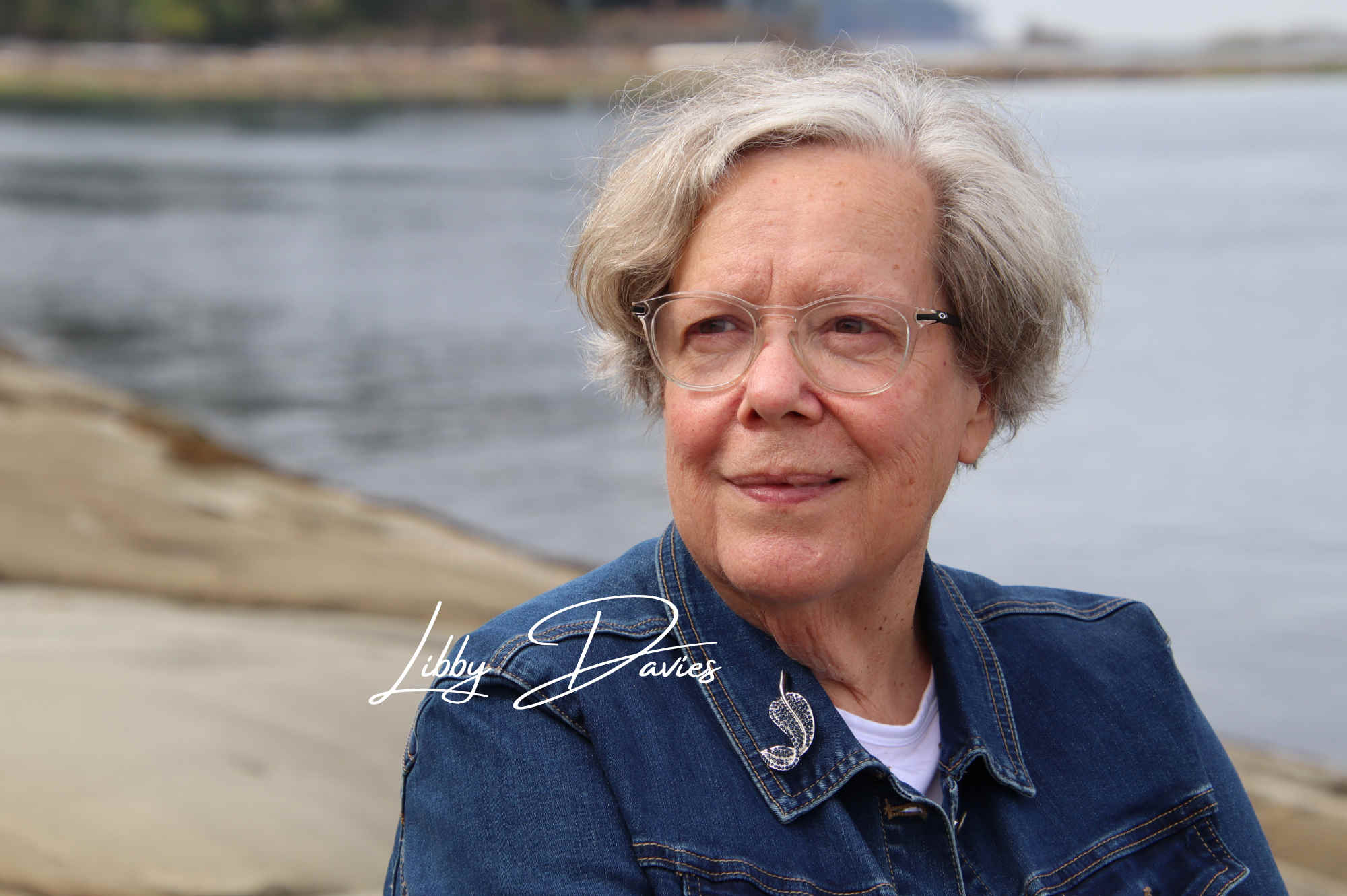
Ms. Libby Davies (Vancouver East, NDP): Mr. Speaker, the leader of the Canadian Alliance led off today on his motion by claiming that this issue of same sex marriage is not about human rights. That is how he started his debate today.
I think it needs to be said that he and his party are dead wrong. It is about human rights and no matter how the Canadian Alliance tries to squirm out of it, or twist it, or make it an issue that it is about the courts, or grab any other kind of excuse they cannot escape judgment that this is about human rights. It is about their stance on human rights. It is about our Charter of Rights and Freedoms and it is about the value of our society and how the law is applied to all people regardless of their race, religion, disability, gender or sexual orientation. I want to deal with one other statement that came from the leader of the Canadian Alliance this morning. He said that people had “contorted this issue into a human rights issue without public consensus”. I find it reprehensible that he would challenge the constitutional rights of Canadians to seek justice before the courts. This is something that we have in this country. In fact I would say that we should be applauding the efforts of the people who have advanced this issue through the courts and asserted their own individual rights.
What is equally troubling is the notion of public consensus. What does he mean by this idea of public consensus? Is the Canadian Alliance suggesting that public consensus must exist for change to take place? Can we imagine if that position were applied to interracial marriage which in the past, as my colleague from Burnaby–Douglas has pointed out, was opposed in the United States and where certainly public opinion was very divided? Can we imagine if that same kind of position about public consensus were applied to that issue? I think even the Canadian Alliance would say, no, this would be unacceptable. Yet the principle is no different with regard to same sex marriage.
I do not believe that Parliament has the right to impose a definition of marriage that excludes some Canadians only for their sexual orientation, just as we have no right to outlaw interracial marriage or civil marriage between people of different faiths. The proposed law that we hope that the Liberal government will bring in sooner than later is a permissive law and is not a mandatory law. This is a matter of a deeply personal choice. No one is forcing the leader of the Canadian Alliance to marry a man if he does not want to. Nor is there any suggestion that a religious institution must perform a marriage if it does not want to. This is about a civil marriage between people who are in a committed relationship and make their own choice that they want to marry, whether they are heterosexual or whether they are two women or two men.
I have to ask myself what is it from the point of view of the Canadian Alliance that is wrong with this idea of equality in marriage? I believe it comes from a very deeply ingrained fear, a perceived threat that somehow exists that displays a very deep prejudice toward people who are equal but different. This motion displays a very homophobic attitude.
I can accept that members of Parliament personally are opposed to same sex marriage, that they somehow find it difficult for whatever cultural reasons or religious reasons, but I want to say that we have a privilege here that other Canadians do not have. We have the privilege to vote. The 301 of us in this place have the privilege to vote. I believe that as a member of Parliament I have a duty to uphold human rights, not to diminish them.
What one’s conscience says is one thing. It is a very important matter. But I believe that our duty as members of Parliament is to apply the law fairly and to apply the charter fairly, without prejudice and without bias. I am very proud that our leader, Jack Layton, and our party, advocate and support marriage equality. Our party has had a long tradition of defending minority rights, whether it was Japanese Canadians who were imprisoned during the war or the rights of aboriginal people who still face terrible discrimination. We defend those rights as we do the rights of gays, lesbians and transgendered people, even when it is not popular to do so, in fact, even more so when it is not popular to do so.
I have been delighted to see the celebration of marriage of same sex couples in my own community, including people like Elizabeth and Dawn Barbeau, who are part of the legal struggle and victory for marriage equality. I would like to congratulate Claudette, who is one of the interpreters in the House, and her partner Gail, who were married on June 28. They are part of our community. I am part of the community too and my choice to marry my partner, who is a woman, is surely our choice and no one else’s.
I call on members today to vote down what I think is just a horrible motion. If we believe in equality for Canadians on all of the grounds that exist, then we should be striking down this motion. We should have the courage to do so, even though we know there are varying opinions in the community. We should do it on the basis of equality. We should do it on the basis of justice. We should do it on the basis that if two people, whoever they are, whether they are two men, two women, a man and a woman, make a choice that they want to have a civil marriage, they should be allowed to do so.