EXCERPT: The federal NDP must stand tall in its commitment to a boldly progressive agenda

EXCERPT: The federal NDP must stand tall in its commitment to a boldly progressive agenda

Originally published in rabble.ca, May 16, 2019

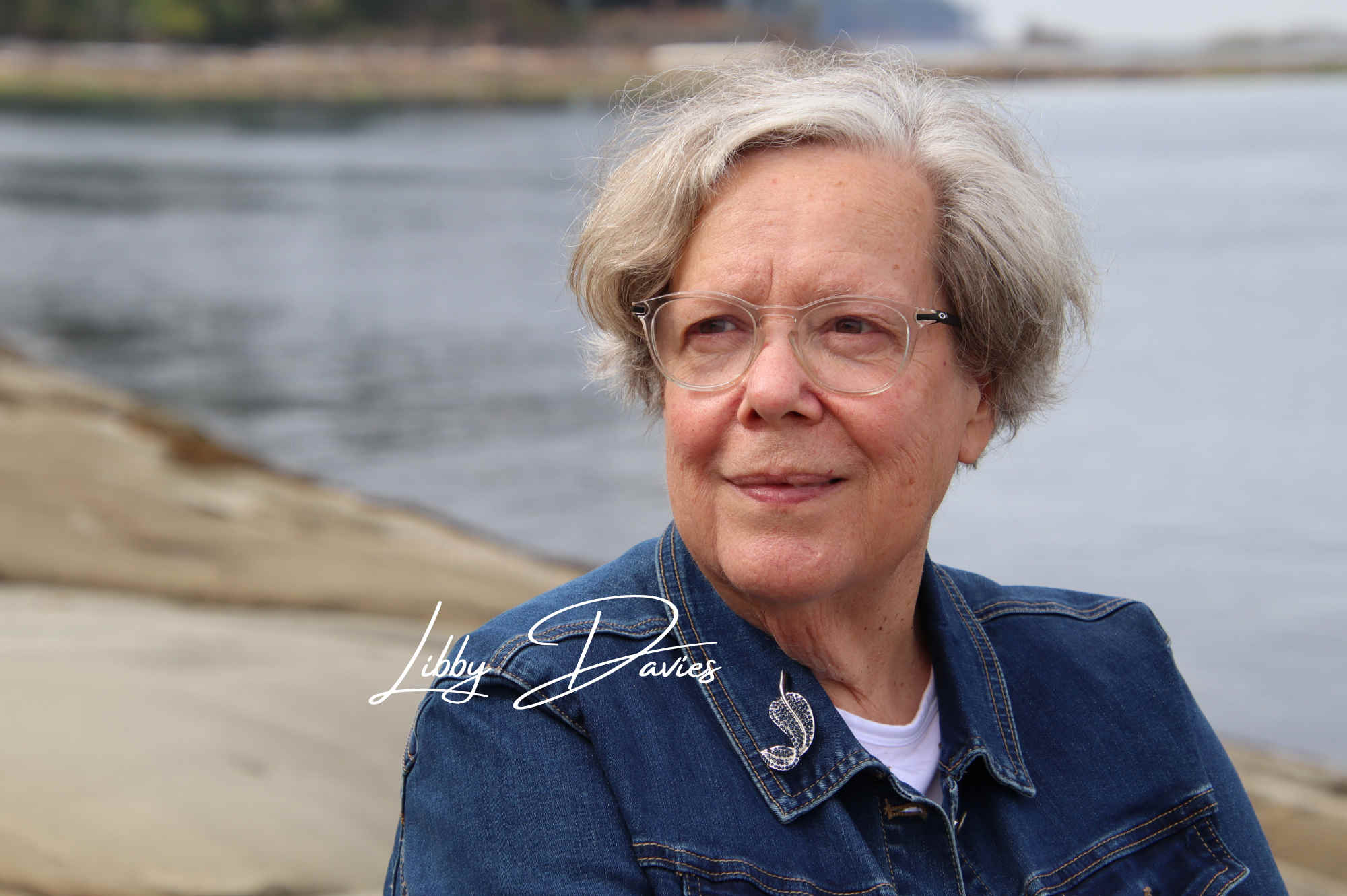
In 2015, Libby Davies retired as deputy leader of the NDP and member of Parliament for Vancouver East, after four decades of work as a politician, community organizer and activist for progressive causes. Her recently published book, Outside In: A Political Memoir, recounts her career and the causes she has worked for, from the legalization of same-sex marriage to housing justice and access to safe injection sites on Vancouver’s Downtown Eastside. In the following excerpt, Davies diagnoses what went wrong for the NDP in the 2015 federal election and how the party can avoid the same pitfalls in the future.

Many things have been written about the 2015 federal election, which sent the NDP back to third place with a Liberal majority government in power. Having retired from political office prior to the election, I nevertheless helped with the national campaign in B.C. What the NDP did or didn’t do — or should have done — has been the subject of much debate. What I think about is our drift . . . like a lifeboat cast from the mothership.

The common analysis is that the NDP abandoned some of its traditional social democratic principles and Thomas Mulcair took the party to the centre, in the hope that we would attract more centre-minded voters, particularly when it came to supporting balanced budgets. But it’s a lot more complicated than that. I think we lost the imagination of the voters because we thought being an efficient and pragmatic electoral machine would do the job. It didn’t begin with Tom; it began earlier as attention focused on “winning” — not at any cost, but by drifting at the margins.

What I dwell on is thinking that said: “it’s what’s happening in Parliament that Canadians pay attention to and determines how they will vote in an election.” That thinking bolstered our hope that we could win in 2015.

Certainly, what happens in Parliament is enormously important. The terrible legislation passed by Harper’s government, his disregard for democracy, his secrecy, arrogance, and elitism, it was all part of a decade of darkness. Fighting the government in Parliament was our job, and we did it well.

But somewhere along the way we lost our bigger vision and connection with people, including some of our base, as we became focused on winning. We forgot how to be creative and bold outside of Parliament and bring people with us.

One example involved the legalization of marijuana. I cannot fathom why we didn’t clearly take a stand. Instead, we let the Liberals walk all over us with their pronouncements on marijuana. For years the NDP had led the way on drug policy reform; we had been the first federal party in 1971 to call for the decriminalization of marijuana before legalization was even raised.

The need for a regulatory and legalized approach is obvious — just as it was during the prohibition of alcohol. But somehow, despite excellent resolutions crafted by NDP marijuana activist Dana Larsen calling for such an approach from more recent NDP provincial and national conventions, we couldn’t say it clearly and unambiguously. We wrapped ourselves in a blanket that we were protecting ourselves from Conservative attacks and that it was a niche issue that only a few people cared about.

I fought tooth and nail, along with Dave Christopherson in caucus, to get us on the right track. And many in the caucus supported a position of being bold and outspoken on the issue. In the end, we settled on lines that were so nuanced that they just missed the point. New Liberal leader Justin Trudeau was on the issue and we looked like tag-alongs, showing up after the fact.

The report of a parliamentary committee studying marijuana gave me the opportunity to table the NDP position in the House on June 15, 2015. Having worked closely with Steve Moran, the NDP’s head of parliamentary affairs and deputy chief of staff, I hoped the statement would make our policy clear — despite avoiding the term “legalization.” In part the statement read: “An NDP government would: Establish an independent commission with a broad mandate, including safety and public health, to consult Canadians on all aspects of the non-medical use of marijuana and to provide guidance to Parliament on the institution of an appropriate regulatory regime to govern such use.” 

Unfortunately, our position was either ignored, or criticized by pro-legalization groups who thought the NDP had not gone far enough.

Of course that issue didn’t lose us the election. But it’s a nagging example of the mindset we got ourselves into. We acted cautiously and too late. The same with climate change, and natural resource management, including pipelines. We started on the right path and then somewhere along the way let ourselves limp along, becoming cautious and careful when people wanted boldness. As often happens in federal politics, we became focused on “managing” what was perceived as a difficult issue, particularly as it impacted various provincial party interests, rather than simply doing the right thing.

No political party is exempt from this kind of game plan; maybe it’s an inevitable outcome of our federation and its complexity of federal/provincial/territorial relations. But there are moments when it is necessary to speak truth to power. I think of the history of the NDP and its opposition to the War Measures Act during the 1970 October Crisis or the original anti-terrorism legislation in 2001, or earlier, speaking out against the internment of Japanese Canadians during the Second World War — these were historic moments that displayed courage and integrity.

All of this to say, I am an optimist by nature and proud of so much of what the NDP does and stands for. I know we face formidable double standards in the mainstream media. Regardless of how well we do, they would still find a way to trash or ignore us. On that I am cynical. All the more reason for us to be smarter than all of them, and find new ways to do politics with people who have a passion for social justice and a better world.

In these political times, the NDP is needed more than ever. The rise of right-wing populism even here in Canada and the underwhelming position of Trudeau’s Liberal government on crucial issues such as climate change, democratic electoral reform, income inequality, and more make it crucial for the federal NDP to stand tall and unwavering in its commitment to a boldly progressive agenda. We must embrace a post-fossil-fuel economy and lead the way on an economic and social transition to it, and demonstrate that retraining, good jobs, and social advances create a healthier economy and healthier society overall.

We have nothing to lose and everything to gain when we stand by what we believe in and learn from the historical roots that are our foundation. Tommy Douglas brought public health care that we couldn’t now not imagine. Jack Layton brought hope and optimism that a different kind of politics and country is possible. I know we have the ability and capacity to realize a vision with Canadians where people live their lives to the fullest potential without destroying the environment around us.

Excerpted with permission from Outside In: A Political Memoir, by Libby Davies (Between the Lines, 2019). Image credit: Joshua Berson


Government

Government

Ms. Libby Davies (Vancouver East, NDP): – Ms. Libby Davies (Vancouver East, NDP): Mr. Speaker, my question is for the government House leader.

We showed up in this session ready to get to work and ready to get something done for Canadians. What did we get? We got a do nothing legislative agenda that is filled with housekeeping bills, committee reports and even leftovers from the Chrétien years.

I have a very straightforward question. Does the government have a priority for the fall, and if so, where is it and what is it?


How sexist they were when I entered politics … how youthfully polite I was

How sexist they were when I entered politics … how youthfully polite I was

In the research for my book Outside In: A Political Memoir, I came across a 1982 election interview on BCTV with Jack Webster — the journalist known as “king of the Vancouver airwaves” at the time — where my right to run for city council was challenged based solely on my gender. This wasn’t my first election: I had run in civic elections for city council in ’76 and ’78, and had been elected as a Parks Commissioner in 1980. That year my partner, Bruce Eriksen, had been elected to city council. In the 1982 election we both again ran for council seats. In the Webster interview, Councillor George Puil took aim at Bruce, accusing him of “trying to get his wife Libby Davies elected to city council, so we will have a man and wife team on council!” Webster replied, looking at Bruce, “You’re joking! You both aren’t running for council at the same time are you?” The sexist “joking” carried on into his interview with me where Webster challenged who would care for my son if we were both elected? Read the full article below.


The Tyee: The Fight for Equal Marriage, with No Help from Jason Kenney – Libby Davies


The Tyee: The Fight for Equal Marriage, with No Help from Jason Kenney

In 2015, Libby Davies made the long trek home from Ottawa’s House of Commons to Vancouver for the final time. For 18 years the NDP MP represented Vancouver East, where she’d spent decades at the centre of some of the most important activism the city has seen: fighting for the rights of low-income residents to safe and affordable housing; the rights of sex workers to protected and dignified workplaces; and the rights of drug users’ access to clean drugs, among others. In her hopeful new memoir ‘Outside In,’ Davies recounts those early days with her partner Bruce Eriksen, bringing to life a Vancouver pumped full of activist adrenaline and the dream of making the city a decent home for all. Davies also recounts her years as a member of Canada’s Opposition, which showed her that progressive policies were still possible when people worked collaboratively across parties, together, in good faith. In 2001, Davies was the first female Canadian MP to reveal publicly that she was in a same-sex partnership. Today, we’re pleased to share an excerpt from ‘Outside In,’ about the steps towards Canada legalizing same-sex marriage, which finally happened in 2005.


The Hill Times: I went to Ottawa to fight for social justice

The Hill Times: I went to Ottawa to fight for social justice

Former NDP MP Libby Davies talks about what made her a good MP and about her book, Outside In: Political Memoir…. When I arrived on Parliament Hill in 1997 as a new MP, it was with a compelling sense of urgency about the staggering number of deaths from overdoses amongst people who used street drugs in the Downtown Eastside in my riding of Vancouver East. I knew I had to do something to stop these tragic and preventable deaths of people who are vilified and demonized by the criminal justice system. Full article available on The Hill Times.


My speech in Parliament on Medically-Assisted Dying

My speech in Parliament on Medically-Assisted Dying

Ms. Libby Davies (Vancouver East, NDP):

Mr. Speaker, I will be sharing my time with the member for Timmins—James Bay.

I am very pleased to participate in this debate today. I want to begin my remarks by reflecting on the importance of this issue and on it really being a non-partisan issue.

I want to thank the member for Charleswood—St. James—Assiniboia for the bills he has presented in the House. I know that there are also two members in the Senate, from two different parties, a former Liberal and a Conservative, who have presented a bill. I think it reflects the deep feeling that individual members of Parliament have on the issue of medically assisted dying.

In fact, the member for Charleswood—St. James—Assiniboia and I attended a forum in Calgary in August of last year. We did a forum together with Dying with Dignity Canada and other organizations. People were a bit taken aback that a Conservative member and an NDP member would be at the same meeting talking about the same issue. Yet I think it was a good discussion, and we shared very similar viewpoints on what needed to be done.

I also want to remember the incredible work that was done by a former member of Parliament, who is well known to us, Svend Robinson. He rose on many occasions in this House and spoke about medically assisted dying. In fact, he was one of the key people who worked with and helped Sue Rodriguez in her battle, both legal and medical. She had tremendous courage. Svend was someone who was by her side to support and assist her. He never gave up on that issue.

I also remember Francine Lalonde, who was a wonderful member of Parliament from the Bloc Québécois. She brought forward a private member’s bill in the House on medically assisted dying. I voted for the bill. In fact, I voted twice for it, because she brought it back again. Ms. Lalonde has since passed away, but she was a tremendous advocate on this issue. We again thank her for her work.

Right there, members can see that this is a very non-partisan issue. I think it reflects the feelings on this issue in Canadian society.

I also want to pay tribute to my colleague from Timmins—James Bay for the hard work he has done on palliative care, because it is part of the debate in terms of ensuring that there is a continuum of care. To me, the issue of palliative care and medically assisted dying are not things that are mutually exclusive, where it is either/or. It is something that is part of a process and a choice people need to have. We need to have much better access to palliative care in this country.

Even with the passage of Motion No. 456 by the member for Timmins—James Bay and the debate that took place in this House, the fact is that we have made very little progress. I think there are some very serious questions as to why we have not seen the follow-through from the government, whose members actually voted for the motion.

I also want to point out the organizations in this country, such as Dying with Dignity Canada, and others. They have done incredible work, not just on the legal front but also in education and working with local communities and people who are interested in this issue.

I did a forum in Vancouver with Dying with Dignity Canada about six weeks ago. It was a very interesting meeting. There was a diversity of people who came to the meeting. We had presentations. This was before the Supreme Court of Canada decision. It was a serious discussion that reflected the seriousness with which people look at this issue. What really stood out for me was that people were very clear that this is an issue about consent and choice and that the state, and I think it is very well reflected in the Supreme Court decision, should not be in the position of making a decision for adults in terms of what they decide to do about the end of their lives, the care they have, or when they need to end their lives based on their unique and particular circumstances.

I passionately believe that members of Parliament can be opposed to medically assisted dying, but can still support the decision by the Supreme Court of Canada and the premise that this is about an individual’s decision. That is not something that I or anyone else in this place should be able to pass judgement on.

I do believe that we have an incredible responsibility to follow up the decision by the Supreme Court, which was unanimous, to make sure that we do not drop the ball and we do not somehow push this somewhere to the back, because we consider it to be controversial, or for some other reason. This is an issue about here and now. This is about people now who are suffering and who have very compelling situations where they need to be able to make a decision about their own life and what happens. For that reason, I thank the Liberal members who brought the motion forward today.

I agree with the last person who intervened. If we do not start now, then when will we? I have heard arguments that there will not be enough time and that an election is forthcoming. We can always come up with 1,001 reasons why this is not the appropriate time or why we should not begin our work now. I can think of one compelling reason why we should start now, which is that for some people time is running out. Unless we do our job, we are completely abdicating the responsibility that has been given to us by the Supreme Court of Canada.

Like my colleague from Charleswood—St. James—Assiniboia, I wish that we were not following on the heels of the Supreme Court of Canada. I wish that we, as Parliament, had been able to arrive at this in our own way and through our own process, as happened in Quebec. The process there was really quite incredible. They went through the proper consultations and eventually came forward with their legislation.

There is a vacuum now. Unless we begin today or next week, we are letting down an awful lot of people. We are copping out, and we cannot afford to cop out on this issue.

Maybe this special committee is not perfect. Maybe someone thinks that it should be slightly different. I certainly agree with my colleague from Timmins—James Bay that we wish it included the issue of palliative care in a more formal way. Should this motion pass, we will do our best to ensure that these issues are also covered.

However, the fact is that this is the motion before us today and that we will be voting on today. I cannot see any reason why we would not support it, because it is about a process. It is about us as parliamentarians doing our job to uphold this very historic landmark decision made by the Supreme Court of Canada.

In the name of Sue Rodriguez and all the people who have suffered and brought forward the current legal action and sacrificed so much, I really feel that we are compelled to take action here. It will be very disappointing if we do not meet that goal and if we do not meet that responsibility and we somehow just slough it off and say there is this excuse and that excuse. There are no more excuses.

This is a day for us to recognize what we are here to do as members of Parliament for our constituents. It is a day for us to get above partisan politics. In that way, I find the decision by the Supreme Court of Canada very affirming. It affirms what we need to do. Let us make sure that we take it up and affirm our responsibility to work with each other and set up a process to ensure that this consultation does take place, so that within a year, we can do the job that has been set out for us.

Hon. Steven Fletcher (Charleswood—St. James—Assiniboia, CPC):

Mr. Speaker, I would like to thank the member for Vancouver East for her comments. I thank her for bringing up that forum that we did together. I do recall it. It was actually in July. I remember it because it was during Stampede week and there was a glorious blue sky that evening. It was hot, and the venue was in an obscure building with no air conditioning and only one fan. There was little notice for the forum, yet we had a fantastic turnout. Even some media turned out.

I would like to give the member for Vancouver East the opportunity to relay to the House some of the comments and feelings of the people who attended that day.

Ms. Libby Davies:

Mr. Speaker, I am glad that the member’s memory is better than mine. I now remember that it was a hot day and that it was during the Calgary Stampede. What I remember most about that meeting is that people were so surprised that we were there, that a member from the government side and a member from the official opposition could be at the same meeting and have a respectful discussion. It spoke clearly to me as to how people in this country are so cynical about politics. They see us in question period and that is the view they have of us and they do not know that there are many instances where MPs do work together.

The motion by my colleague from Timmins—James Bay on palliative care is another very fine example of how the House can come together on the wording and approve a motion on the importance of palliative care and the need for a federal strategy.

Therefore, I would like to see us go further, to take that up and say that we are willing to work together on this issue and are willing to make sure that there is a genuine, meaningful, democratic consultation that will lead to the necessary legislative framework.

Hon. John McKay (Scarborough—Guildwood, Lib.):

Mr. Speaker, I want to thank colleagues for what I regard as a largely respectful debate throughout the day and minimal partisanship. I want to address the one specific issue that seems to be of most concern, because once people work through the issues around physician-assisted suicide, it comes down to giving an appropriate, respectful length of time to what should be the legislative response. Therefore, I would be interested in the hon. member’s views with respect to the compressed 12-month timeline that the Supreme Court has given in deference to Parliament, whether she has any thoughts as to whether that is sufficient and, if it is sufficient, if this is the appropriate motion to get it going.

Ms. Libby Davies:

Mr. Speaker, I do not know all of the reasons that the Supreme Court of Canada justices laid down one year. I could possibly speculate that they felt this was such a compelling issue affecting the dignity of people, their right to life, and their own decision-making process that they really wanted to make sure that Parliament did not just wander off and do nothing, or do whatever over whatever period of time. Therefore, the specific timeframe of a year, which I do not think is too short, is very important because it is now moving us to do something. It has been somewhat disconcerting that we have not seen anything proactive from the government on what it wants to do. If it has ideas, then let it bring them forward. Right now we have this motion that lays out a particular cause.

I would point out that if a special committee gets going relatively quickly, there is nothing to prevent it from meeting during the summer. We have committees that meet throughout the summer all the time. Therefore, from a logistical point of view, this is very doable. If we do not start now, then we are just delaying it further.


Top