Collegiality reigns as Vancouver’s new council starts work
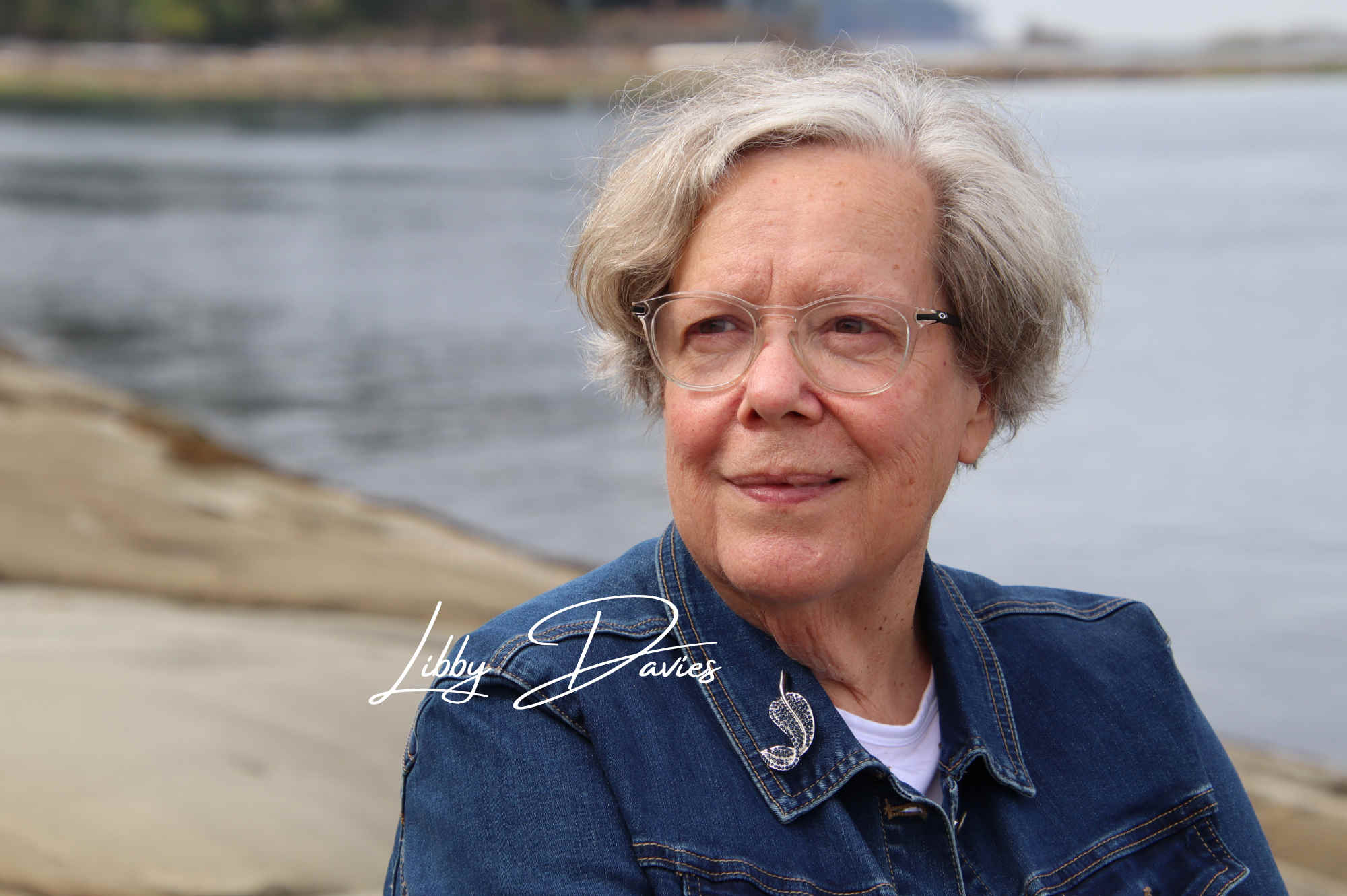
“Our new city council has a very interesting mix of people, with varied backgrounds and experiences,” said Libby Davies, the former NDP MP for Vancouver East, who was the MC for the inaugural ceremony. “I think it’s fair to say that the eyes of Vancouver are upon you, to see what you do, both individually and collectively,” she told the new councillors. “There is no clear majority from any one group and so for the first time in many years — well, decades — there is no sure bet about anything. This presents a unique challenge that might unsettle some people. But it also produces an opportunity to be a city council that breaks through partisan histories and traditions, to find ways of learning and co-operating.”
Mayor Kennedy Stewart promises ‘respect’ in leading next city council
Guests included former premier Mike Harcourt, who was elected mayor in Vancouver in 1980 as an independent. Stewart said Harcourt’s time as an independent mayor provides “historical guidance” on how the next four years will go at city hall. “Mike tells me such councils perhaps have the greatest potential for success, as all voices matter equally,” he said, noting Harcourt’s council also included his colleague, former Vancouver-East NDP MP Libby Davies, who was master of ceremonies Monday. It was Davies who urged Stewart and the councillors to break through “partisan histories and traditions to find ways of learning and co-operating.” She said the “easy road” is to slide into hyper-partisanship, which Vancouver councils have a strong history of doing because of majority governments. “We have high hopes for this new city council, and we wish you well,” she said. “Seek what unites you while respecting your adversaries, work in good faith for the greater good of our city.”
Libby Davies among recipients of City of Vancouver 2018 Civic Merit Award
Mayor Gregor Robertson, on behalf of City Council, today honoured 18 individuals with a Civic Merit Award in recognition of their outstanding achievements benefiting the community. The Civic Merit Award recognizes individuals for achievement in a particular field of endeavour in sports, science, arts, or culture within the city and the province, or in recognition of a specific service. City Council must vote unanimously to honour someone with the Civic Merit Award. The City began awarding the Civic Merit Award in 1942.
The original article, 2018 award recipients was published on October 30, 2018 in Vancouver.ca. Author(s): Vancouver.ca
Over the decades, I’ve run in nine Vancouver civic elections, winning five. But, as a long time voter, this latest election on October 20 was one to remember.
Into the wee hours of the morning we waited doggedly for the last polls to come in — hanging out at the legendary Polynesian bar room in the basement of the Waldorf Hotel on Vancouver’s Eastside, desperate to see who would be mayor. Hanging in the balance were the 10 city councillors who make up Vancouver city council who had already been declared elected — five for the right-orientated NPA and five representing the Greens, COPE and One City parties. All evening, the vote count had wobbled back and forth by a few hundred votes, between independent Kennedy Stewart, who represents progressives, and Ken Sim, from the NPA. Sim and his team had spent buckets of money during the campaign hoping to regain power in the city they once dominated.
Finally, there were whoops of jubilation as the last poll, No. 133/133, came in confirming Stewart’s narrow 900-vote lead — and the prospect of a new progressive city council became a little more real.
The voters of Vancouver sent a message they wanted change. Gone were the high hopes for VISION Vancouver, which had been in power for a decade.
This year, voters faced a more complex election process and campaign. Not only did they have to wade through a huge ballot of candidates where names were placed in random order making it difficult for people to select their choice, the campaign itself was sometimes confusing as as civic organizations ran partial slates and there were many independents.
But now that the election results are in, what can we expect?
It’s a very mixed bag, and the days of a dominant majority group have ended — at least for now.
The new progressive majority on city council — with Stewart as mayor and three Greens, one COPE and one One City representative — is held together by a fragile thread of generally held common positions from the separate platforms of each group. It is not exactly an iron-clad guarantee that things will work.
The new council has eight female councillors — an historic high for Vancouver. But it needs to be noted that the new council doesn’t reflect the multi-racial make-up of the city.
We have an exciting opportunity before us — and possibly a bold model for progressive politics. Things could go extraordinarily well if the players involved can get passed the old and negative baggage of division and past partisan bickering. Or, it could crash and burn as individual partisan agendas and egos take over.
Critical to success will be the ongoing leadership and involvement of the Vancouver and District Labour Council, which did a heap of brave work in difficult circumstances prior to the election, weaving together a list of supportable candidates to guide progressive voters. Their continued leadership is now very important to a successful outcome.
Of course, the role and leadership of the new mayor and council is critical, too. I have high hopes and confidence that Stewart has the skill and capacity to work across party lines, as he did in Parliament as an MP, to forge strong relationships to deliver the critical changes for Vancouver. He is focused, creative and interested in results, not playing games.
Green councillor Adriane Carr, with her long-standing experience with how city hall works, can be a positive role model for new councillors. Also, watch for One City newbie Christine Boyle, who has already demonstrated her democratic and lovely way of working with people in the community. And COPE’s Jean Swanson — my old time friend and comrade from the Downtown Eastside in the early 1970s — is a powerful force for change that is needed more than ever.
There will be many challenges ahead — not the least of which is unrelenting pressure from powerful development interests who have enjoyed enormous influence in Vancouver and are bound to a belief that they know what’s best for the city.
We are facing multiple crises — housing affordability, overdoses from a poisonous drug market, a city fractured by wealth and poverty where more and more people are pushed out by high prices and growing isolation.
We have high expectations that the new progressive members of council will get to work on these and many other issues. They won’t be prefect and they will make mistakes. Residents need to accept that and not set impossible standards that no one can reasonably meet. Their chances for success depends on their ability and good faith to work together and, most importantly, to develop trust with each other without judgment and punishment. I believe they can do that. And as their constituents, we can reinforce the principle that goodwill and cooperation are the order of the day.
Libby Davies is a former COPE city councillor and former member of Parliament.
B.C.’s electoral referendum has begun, giving British Columbians the opportunity to choose a stronger, more democratic system of electing government.
We care deeply about this referendum because of our decades of work on civic engagement, human rights, environmental justice and equity. We have seen how our existing system — first past the post — does not serve these fundamental social values. We are speaking out to urge voters to say loud and clear that it’s time to modernize our electoral system and make it work for people by voting in favour of proportional representation.
We are concerned about the impact of our existing system on voter engagement. Many people who care passionately about creating a better society — grounded in human rights, climate protection and social justice — feel turned off by the current system. They feel our diversity is not reflected in who wins. Many people and communities are excluded by our current system and do not see their interests represented by the major parties.
It is time to change, and join the vast majority of democratic countries that have embraced proportional representation. We know PR is a fairer, more transparent and democratic system that actually ensures every voice and vote counts.
Moving to proportional representation means voters across the political spectrum will see their vote reflected in election outcomes. The percentage of seats held will reflect the popular vote won. More British Columbians will vote, knowing their vote actually counts, improving on the abysmal 50- to 60-per-cent turnout we have seen for decades.
Finally, proportional representation will eliminate the scourge of strategic voting. No one wants to vote for a party they dislike in order to stop the party they dislike most, as they often do under first past the post. People want and deserve to vote their values and perspectives. First past the post stifles many critical voices who have important perspectives to bring to the table.
Voting for PR will bring a positive impact to future elections in B.C. It’s a change that gives diverse voices and communities a fighting chance to be heard in the political arena. We think that’s long overdue.
Libby Davies was the Vancouver East NDP MP from 1997 until 2015. Katrina Pacey is a human-rights lawyer who lives and works in Vancouver.
Mayor-elect Kennedy Stewart to lead mixed Vancouver city council
Kennedy Stewarts is mayor-elect of Vancouver. He was endorsed by several former and current NDP politicians, including Vancouver-Kingsway MP Don Davies former Vancouver-East MP Libby Davies and former B.C. premier and Vancouver mayor, Mike Harcourt.
After Nail Biting Night, Kennedy Stewart Is Vancouver’s New Mayor
Kennedy Stewart will be the next mayor of Vancouver after a nail-bitingly close race to the finish against NPA candidate Ken Sim. He will now preside over a city council that is at once more progressive and more conservative than the previous council. “Was that close enough for you?” Stewart said to roaring applause in the basement of the Waldorf Hotel in east Vancouver. Stewart beat Sim by just under 1,000 votes, according to unofficial election results posted on the City of Vancouver website. Independent candidate Shauna Sylvester placed third. During an election dominated by housing and unaffordability, Stewart promised to build tens of thousands of non-market housing units, create a new city position to advocate specifically for renters and form a Downtown Eastside emergency task force to address the opioid crisis. “Today people voted to take action on these challenges,” he said. “What we do has to make life better for everybody. .. At Stewart’s event, former NDP MP Libby Davies said the success of progressive politicians in this year’s municipal election was driven in part by a popular backlash against Vancouver’s developer community: “I feel like we’re in a period of time now where most people feel like developers have too much control over City Hall, they have too much influence over what’s going on in terms of development,” she said.
Kennedy Stewart wins razor-thin vote to become Vancouver’s next mayor
Former Vancouver East NDP MP Libby Davies, who was at the Waldorf, said she was “very happy” to see Mr. Stewart elected mayor after a civic election the likes of which she hasn’t seen in a long time. Ms. Davies said she believed the electorate voted for someone who would keep his promises and work well with others. “I think he showed in parliament that he’s an easygoing guy, and that he likes engaging with people,” she said. “He’s the kind of guy who can reach across the table and say, ‘Let’s get partisanship out of the way.”
Brock students given opportunity to shadow women in parliament
Taylor Holroyd, who attended the trip through the McGill program in 2014, shared her experience on their website. According to Holroyd: “On the second day, I had the amazing opportunity to shadow with MP Libby Davies of Vancouver East. Libby made me feel extremely welcome and engaged throughout the day. The highlight was certainly the meeting of the Standing Committee on Health, where I got to see Libby in her element: asking candid questions and responding with eloquence and ease. Libby has over 17 years of experience as an MP, so she had many fascinating stories to tell about her time in Parliament. We were able to speak frankly about sexism on the hill, overcoming gender barriers, and the importance of women in government.”